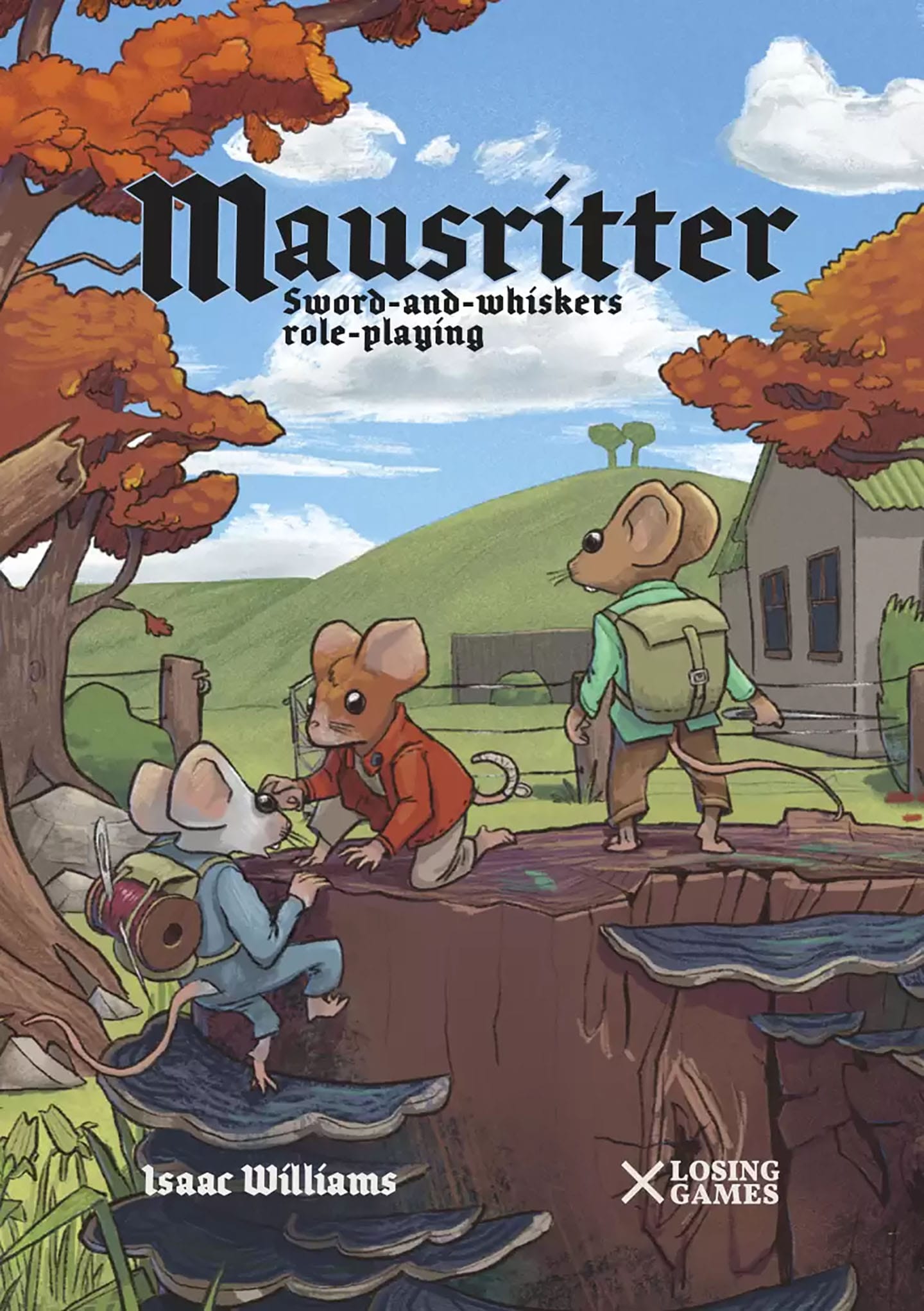
Mausritter stands out in the crowded landscape of old-school revival games by shrinking the scale of heroism down to something delightfully intimate. Released in 2020 by indie publisher Losing Games, this tabletop RPG invites players to step into the paws of anthropomorphic mice navigating a world brimming with oversized dangers. It’s not just another fantasy romp; it’s a clever twist on classic dungeon-crawling tropes, where everyday household horrors like cats, rats, and leaky roofs become legendary threats. For fans of OSR systems seeking fresh perspectives, Mausritter delivers a compact, evocative experience that punches above its weight.
The Setting: A Cozy Yet Deadly World of Whiskers and Shadows
At its heart, Mausritter unfolds in a sprawling, mouse-sized realm inspired by tales of woodland heroism but grounded in gritty survival. Picture a vast hex-crawl map where ancient forests loom like endless wilds, abandoned human attics serve as crumbling ruins, and a single raindrop can spell disaster. Players’ mice hail from burrows and hamlets, venturing out to scavenge lost treasures, rescue kin from predators, or unravel mysteries tied to forgotten mouse lore.
What gives the setting its pull is the contrast between the mice’s quaint, communal lives and the brutal wilderness beyond. Villages bustle with herbalists brewing acorn ale and tinkerers crafting twig-and-string gadgets, but step outside, and the world sharpens into focus: predatory birds circle overhead, rival rodent clans scheme in the underbrush, and eldritch remnants of larger civilizations hint at cosmic perils scaled down to rodent proportions. This blend of pastoral charm and lurking peril creates a sandbox ripe for emergent stories, whether it’s a band of mice fortifying a grain silo against beetle hordes or negotiating uneasy truces with squirrels.
The core rulebook includes a ready-to-run campaign map, dotted with encounter tables, lairs, and hooks that encourage sandbox play. It’s designed for groups to carve their own paths, with the environment as both ally and adversary. This setup resonates with OSR enthusiasts who appreciate worlds that feel alive and unforgiving, yet accessible for newcomers dipping into mouse-scale fantasy.
Building Your Mouse: Fast, Flexible, and Full of Personality
Character creation in Mausritter keeps things brisk, aligning with the game’s rules-light ethos. Each mouse starts with three core attributes: Strength for raw power, Dexterity for agility and finesse, and Will for mental fortitude and luck. Roll 3d6 for each, or point-buy if you prefer control, then pick a background like “burrower” or “scavenger” that nods to your mouse’s origins without overloading on backstory.
The real charm lies in the inventory system, a standout feature that visualizes your mouse’s loadout on a simple grid. With limited slots—typically six to eight—players must prioritize: a rusty needle sword, a thimble shield, a sling of dried berries for rations, or a scrap of enchanted cloth? This encourages creative problem-solving right from the start, as mice can’t haul infinite gear like bulkier heroes in other systems. Add a few traits, a name evoking rustic whimsy (think “Thistle Quickpaw”), and you’re ready to burrow into adventure.
This approach lowers the barrier for solo prep or one-shots, making it ideal for busy tables. It’s a nod to OSR simplicity, but the thematic flair—mice wielding acorn grenades or cheese-wedge armor—infuses every creation with immediate personality.
Core Mechanics: Roll Low, Think High
Mausritter’s rules draw from the streamlined spirit of early OSR designs, emphasizing player ingenuity over crunchy math. Resolution hinges on a d20 roll-under mechanic: when success isn’t guaranteed, roll against your relevant stat. Beat or tie the number? You succeed. Modifiers are rare, reserved for extreme circumstances, which keeps turns snappy and spotlights narrative choices.
Combat mirrors this efficiency. Initiative flows narratively, with mice acting when it makes sense in the fiction. Attacks use the same roll-under system, dealing damage based on weapon type— a dagger might nick for 1d4, while a improvised club swings for 1d6. Hit points are low (equal to Strength), so fights feel tense and tactical; dodging behind a leaf or luring foes into traps often trumps brute force. Saving throws against hazards or magic pull from Will or Dexterity, adding layers without complexity.
Magic operates through “prestidigitation” spells—short, flavorful bursts like conjuring illusions from shadows or mending wounds with herbal poultices. Casters prepare a handful daily, but the system avoids spell-slot bloat, letting arcane mice feel mystical without dominating play. Exploration shines here too, with procedures for hex travel, weather effects, and random encounters that reward cautious scouting and resource management.
Overall, the mechanics foster a rhythm of bold risks and clever pivots, perfect for sessions that blend humor with high stakes. It’s forgiving enough for casual play but deep enough to support epic campaigns.
Playstyle: From Cozy Burrows to Perilous Quests
A typical Mausritter session might open in a mouse village, where rumors of a stolen sacred relic draw the party forth. Travel across the hex map involves light rolls for navigation or fatigue, punctuated by wandering monsters like territorial ants or spectral moths. Dungeons—reimagined as root warrens or clockwork ruins—demand vertical thinking: climbing vines, squeezing through cracks, or rigging pulley systems from thread.
The game’s tone strikes a balance, allowing for lighthearted moments (a mouse bard serenading allies with lute fashioned from a matchstick) alongside darker threads, like the shadow of a cat’s paw blotting out the sun. Group dynamics emerge naturally, with mice relying on each other’s strengths— the sturdy fighter hauling doors, the sly rogue picking locks with a fishbone. This collaborative vibe suits mixed-experience tables, as the rules prioritize “yes, and” rulings over rigid adjudication.
For longer arcs, the included adventure seeds expand into full campaigns, weaving personal stakes with world-shaking events. GMs find ample tools in random tables for lairs, treasures, and NPC quirks, ensuring replayability without endless prep.
What Sets Mausritter Apart in the OSR Ecosystem
In a sea of OSR titles revisiting elves and orcs, Mausritter carves a niche with its diminutive protagonists. The scale shift reframes classic elements: a “dragon” might be a territorial toad, turning hoary tropes into novel challenges that spark fresh tactics. This inversion highlights themes of community and resilience, as mice band together against odds that feel insurmountably vast.
The production values elevate it further. The hardcover core set boasts Ben Milton’s intricate black-and white illustrations—think detailed cross-sections of mouse lairs and perilous landscapes—that immerse without overwhelming. Layout prioritizes usability, with bold headers, ample whitespace, and indexed rules for quick reference. At around 100 pages, it’s concise yet comprehensive, including a beginner’s adventure to jumpstart play.
Compared to broader OSR fare, Mausritter’s accessibility shines for family games or intros to the hobby, yet it retains the lethal edge that veterans crave. Its influence ripples through community hacks, from aquatic mouse variants to crossover modules, underscoring its versatility.
Expansions and Community Buzz
Since launch, Mausritter has sprouted a vibrant ecosystem. Supplements like “Honey in the Rafters” add bite-sized locations, while third-party creators on platforms like itch.io offer themed adventures, from haunted harvest festivals to undercity intrigues. The official library curates these, fostering a collaborative scene that keeps the game evolving.
Players often praise its adaptability for solo journaling or theater-of-the-mind play, with the visual inventory translating seamlessly to digital tools. As of late 2025, whispers of new content—like a November event teasing expanded lore—hint at ongoing vitality, ensuring Mausritter remains a staple for mouse enthusiasts.
Grab Your Copy: Resources for Mouse-Sized Mayhem
Ready to muster your own band of whiskered warriors? Mausritter is widely available in digital and print formats, making it easy to stock your shelf.
- Official Homepage: Dive into previews, SRD rules, and community spotlights at mausritter.com.
- Core Rulebook on itch.io: Pick up the PDF or print-on-demand version from the publisher’s page at losing-games.itch.io.
- DriveThruRPG Edition: Grab the bundled set with extras in digital or physical form at drivethrurpg.com.
- Mausritter Library: Explore free and paid adventures curated for your table at library.mausritter.com.
Leave a Reply